Saline soils limit plant growth by reducing water uptake, restricting root development, and tying up essential nutrients, even when they are present in the soil. Foliar feeding offers a short-term solution by delivering nutrients directly to plant leaves, helping crops stay healthy and productive while long-term soil remediation is underway.
Saline soils are a big problem. Elevated soil salt levels make it more difficult for plants absorb water, grow strong root systems, and access vital macronutrients and micronutrients. Remediating saline soils can take several growing seasons. But that doesn’t mean there is nothing you can do now to help your plants this year.
The ST Biologicals mentors often recommend foliar feeding to farmers struggling with saline soils. While we work with them to resolve saline soils in the long term, foliar feeding can be a literal lifeline for plants in the short term. Here is closer look at saline soils and how foliar feeding can benefit plants on your saline acres.
How Soils Become Saline
Salts in soils come from many sources. The main salts present in soil are sodium, chloride, and sulfur. Nitrates, carbonates, and bicarbonates are salts present in soils as well as irrigation water. Sodium, chlorides, and sulfur may also be present in irrigation water. When salts in irrigation water get spread on soil that already has elevated salt levels, the soil may become saline or sodic.
A soil test can tell you if your soil is saline. Here are a few numbers to look for.
| Nutrient | High Level Threshold | Impacts on Soil |
| Boron | 1.5+ ppm | Salinity increases |
| Calcium:Magnesium Ratio | Less than 5:1 | Very tight soil |
| Chlorides | 100+ lbs | Salinity increases |
| Nitrates | 100+ lbs | Root system growth affected |
| Phosphate | 70+ ppm | Root system growth affected |
| Phosphorus | 50+ ppm | Salinity increases |
| Sodium | 400+ ppm | Assume chlorides also high |
| Soluble Salts | 2.5+ ppm | pH & CEC numbers will be inaccurate |
| Sulfur | 300+ lbs | Salinity increases |
Nutrient Availability Decreases in Saline Soils
Saline soil can create a challenges with plant nutrient uptake, even when soil tests show adequate fertility levels. Excess salts compete with plant roots for water uptake, disrupts soil structure, and makes the soil more hostile to beneficial microbes.
Together, these challenges decrease nutrient available for plants. Plants struggle to pull water and dissolved nutrients from saline soils. Soil pore space shrinks, making soil very tight, which limits root growth. Microbes are unavailable to break down nutrients into plant-available forms. All this adds up to severe nutrient availability issues.
Foliar Feeding Can Keep Plants Thriving, Even in Saline Soils
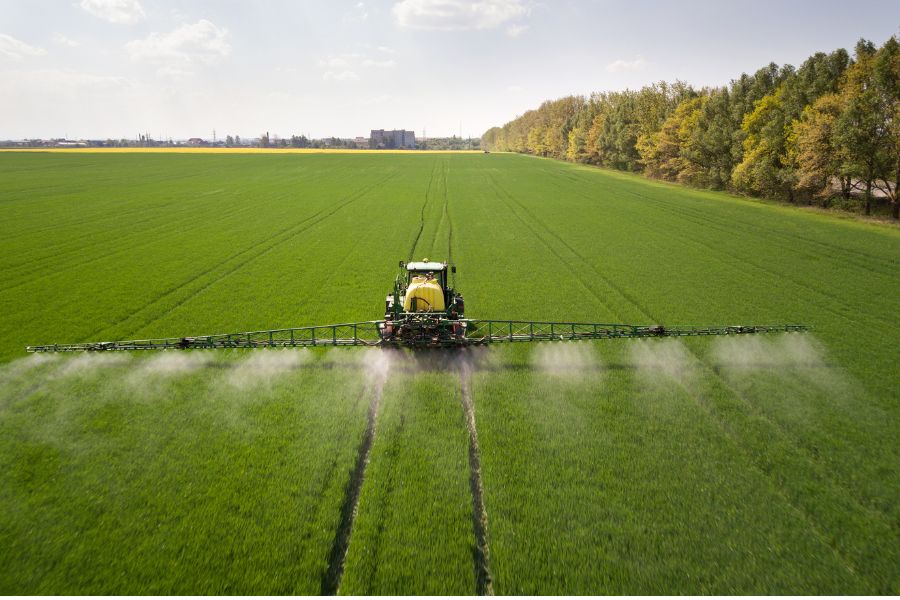
Foliar feeding provides a way for farmers to bypass saline soil and get nutrients directly into their plants. Foliar feeding bypasses roots and allows plants to absorb nutrients through the cuticle and stomata. Plants are able to access essential nutrients immediately, without interference from soil salts.
Foliar feeding reduces plant stress by maintaining nutrient balance when roots are struggling to uptake nutrients. Healthier plants are better able to regulate their water use, maintain cell integrity, and resist pests and disease.
Generally, the ST Biologicals mentors may recommend foliar feeding for most macro and micronutrients when soil pH exceeds 7.5 and salt levels are high. Foliar feeding applies nutrients directly onto the plant, bypassing alkaline soil and its high salt content. Phosphate, potassium, nitrogen, and micronutrients may not release properly in high pH soils where calcium is present.
While foliar feeding is not a replacement for long-term soil improvement, it is a powerful tool to help you maintain crop performance in the short term. The ST Biologicals mentors may recommend foliar feeding in addition to regenerative farming practices that will remediate saline soils, improve soil structure, and bring biological activity back.
Wondering if foliar feeding is part of the solution for your saline soil challenges? Get in touch with our mentors today. We’re here to help you succeed. When soil speaks, we listen.
Foliar Feeding for Saline Soil FAQs
What causes soil to become saline?
Saline soils develop from the accumulation of salts like sodium, chloride, and sulfur, often from irrigation water, fertilizers, and natural soil conditions.
How do saline soils affect nutrient availability?
Excess salts interfere with water uptake, damage soil structure, and reduce microbial activity, all of which limit the plant’s ability to access nutrients.
How does foliar feeding help in saline conditions?
Foliar feeding bypasses the soil entirely, allowing plants to absorb nutrients directly through their leaves for immediate use.
Is foliar feeding a permanent solution for saline soils?
No, it’s a short-term strategy to support plant health. Long-term improvement requires practices that reduce salinity and restore soil biology. The ST Biologicals team works with you to develop a custom soil remediation program for your operation.