Boron and calcium play complementary roles in soil health and plant development, supporting everything from strong cell walls and nutrient transport to soil structure and fruit development. Maintaining the right balance of these essential nutrients through regular soil and tissue testing can help prevent deficiencies, improve plant health, and support stronger crop quality and yields.
Soil health is the capacity of soil to function without intervention. You improve soil health by optimizing various physical, chemical, and biological factors. The balance and availability of essential minerals plays a crucial role in soil health and plant growth.
Boron and calcium are two nutrients that work in tandem in your soil to improve its fertility and support plant growth. This is why ST Biologicals has developed two inputs that specifically target boron and calcium deficiencies.
Let’s take a closer look at these essential nutrients and how they support soil health and plant growth.
Boron’s Role in Plant Growth and Soil Health
While plants need boron in small amounts, the micronutrient is essential for plant growth and development. Boron has several functions in plants, including:
- Cell Wall Synthesis and Stability: Forms bonds with calcium and pectin and influences lignin formation.
- Calcium Uptake and Translocation: Forms complexes with calcium and enhances its mobility in the xylem.
- Sugar Metabolism and Transport: Regulates the activity of enzymes involved in sugar synthesis and facilitates sugar movement in the phloem.
- Flower and Fruit Development: Involved in pollen tube growth, fertilization, seed set, and fruit quality.
These are the important functions boron performs in plants. In soil, boron has a negative charge. It tends to leach out of the soil with water. Therefore, it is difficult to build up and hold boron in the soil. This means your soil is prone to boron fluctuations and deficiencies.
Plants experiencing boron deficiency struggle to perform the above function. Symptoms of a boron deficiency include brittle, deformed plant tissues, reduced plant strength and quality, and reduced photosynthesis, respiration, and fruit development. These symptoms make your plants more susceptible to diseases and pests.
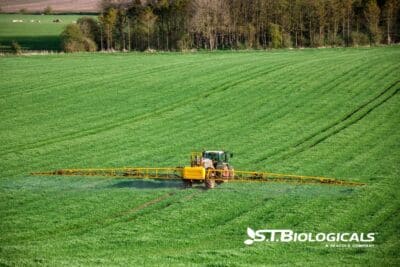
To correct boron deficiency, the ST Biologicals mentors recommend Bantam Boron, a regenerative ag product featuring ADS technology. It is a liquid fertilizer that can be used in soil or as a foliar spray as part of your nutrient management plan once a soil test confirms a boron deficiency. We recommend applying Bantam Boron according to the packaging instructions throughout the growing season, as boron is not mobile within a plant. Split or frequent applications in small amounts provide optimum results.

Calcium Is to Soil Structure and Plant Strength
Calcium is a macronutrient and one of the most abundant minerals in the earth’s crust. It has several roles in plant growth, including:
- Cell Wall Strength: Forms cross-links in cell walls, providing rigidity and stability to plant tissues.
- Plant Growth Regulation: Activates enzymes, influences hormone synthesis, and modulates cell division and elongation.
- Nutrient Uptake and Transport: Maintains membrane permeability and electrical potential and forms complexes with other minerals.
In your soil, calcium improves soil structure by flocculating clay particles and forming aggregates. This increases soil porosity, aeration, drainage, and water retention.
Calcium is relatively immobile in soil and plants. It does not move easily from one place to another. Therefore, it is important to maintain adequate and consistent levels of calcium in the soil and plant tissues to avoid calcium deficiency.
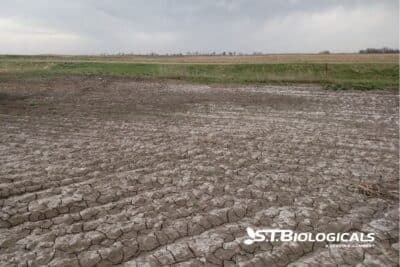
In soil, a calcium deficiency can cause soil compaction, crusting, erosion, and reduced water infiltration and storage. In plants, calcium deficiency leads to reduced nutrient uptake and transport as well as weak plant tissues, stunted growth, wilting, curling, and necrosis of leaves, stems, and roots.
To correct calcium deficiency, the ST Biologicals mentors recommend Bantam Calcium. It is a liquid fertilizer that can be used in soil or as a foliar spray as part of your nutrient management plan once a soil test confirms a calcium deficiency. We recommend applying Bantam Calcium according to the packaging instructions throughout the growing season, as calcium is not mobile within a plant. Split or frequent applications in small amounts provide optimum results.
The Delicate Balance Between Boron and Calcium
Calcium and boron are closely related in plant nutrition. They need to be in balance to ensure optimal plant health and growth.
Calcium is a macronutrient, while boron is a micronutrient. The ratio will always be greater calcium to boron. The ideal calcium-to-boron ratio depends on the crop, the soil structure, and microbial activity.
When the balance is off, you might experience one of these effects.
| Calcium Excess | Calcium competes with boron for uptake and transport, causing boron to precipitate into insoluble forms and therefore boron deficiency in crops. |
| Calcium Deficiency | Causes boron toxicity and reduces plant tolerance to high boron levels. |
| Boron Excess | Boron interferes with calcium absorption and utilization, disrupting calcium metabolism and signaling and causing calcium deficiency. |
| Boron Deficiency | Causes calcium toxicity and impairs the translocation and distribution of calcium, increasing plant sensitivity to high calcium levels. |
Testing your soil and plant tissues regularly allows you to monitor and manage the calcium and boron levels in your soil and plants. Knowing your boron and calcium levels empowers you to apply them in appropriate forms and amounts and avoid imbalances and deficiencies.
Calcium and boron have a complex and interdependent relationship. By understanding their functions and interactions and by applying them in a balanced and efficient way, you can improve soil health and plant performance and achieve higher yields and quality.
From soil and tissue testing to product recommendations and application advice, the ST Biologicals mentors are here to help you optimize the balance between calcium and boron and improve your plant and soil health. Get in touch with our mentors today. We’re here to help you succeed. When soil speaks, we listen.
Boron and Calcium FAQs
Why are boron and calcium important for plant growth?
Boron supports cell wall development, calcium movement, sugar transport, and flower and fruit development. Calcium strengthens plant cell walls, regulates growth, and supports nutrient uptake and transport, making both nutrients essential for healthy plant development.
What are the signs of boron deficiency in plants?
Boron deficiency can cause brittle or deformed plant tissues, reduced plant strength, poor fruit development, and decreased photosynthesis and respiration. Plants experiencing a deficiency may also become more susceptible to pests and diseases.
How does calcium improve soil health?
Calcium helps bind clay particles together into stable aggregates, improving soil porosity, aeration, drainage, and water retention. Adequate calcium levels can help reduce problems associated with soil compaction, crusting, erosion, and poor water infiltration.
Why is it important to maintain the right calcium-to-boron balance?
Calcium and boron interact during plant uptake and development, so an imbalance can contribute to deficiencies or toxicity. Excess calcium can interfere with boron uptake, while excess boron can disrupt calcium absorption and utilization. Regular soil and tissue helps growers monitor these nutrients and make informed application decisions.