Copper may be needed in small amounts, but it plays a vital role in healthy plant development by supporting photosynthesis, strengthening cell walls, and improving nutrient metabolism. Learn how proper copper nutrition can enhance crop flavor, storage ability, and overall plant performance and why foliar copper applications like Attest can help overcome soil availability challenges.
Every farmer knows how necessary the macronutrients nitrogen, phosphorus, and potassium (NPK) are in crop nutrition. Those macronutrients certainly drive growth, but it’s the micronutrients that separate an average crop from a premium one. Copper is one of those essential micronutrients.
Though crops only require small amounts of it, copper’s role in healthy plant development can’t be overstated. It influences many of the biological processes that determine plant health, crop quality, flavor, and post-harvest performance in storage.
From photosynthesis to sugar production to cell wall strength, copper is an essential micronutrient throughout the growing season. Let’s dig into why.
Copper’s Role in Healthy Plant Development
Copper is involved in dozens of enzyme systems within a plant. These enzymes regulate everything from energy production to protein formation. When present in optimal amounts, copper supports the following plant processes.
| Process | Copper’s Significance |
| Photosynthesis | Activates enzymes that convert sunlight into plant energy |
| Respiration | Improves energy efficiency for optimal growth |
| Cell Wall Integrity | Strengthens cell walls through lignin production for stronger stems and improved standability |
| Protein Synthesis | Aids synthesis and improves overall plant metabolism |
| Reproduction | Supports pollen development, flowering, and successful seed formation |
When plants are deficient in copper, they are less vigorous, more susceptible to disease and environmental stress, and can experience reduced reproductive performance before visual symptoms appear. This is one of the biggest challenges with copper nutrition: deficiencies aren’t always obvious. Your copper-deficient crops may still produce acceptable yields, but with reduced crop quality, disease resilience, grain fill, fruit quality, and storage life.
This is why soil testing and tissue testing are valuable tools for understanding copper and other micronutrient availability rather than relying exclusively on your visual observations.
What Causes Limited Copper Availability in Soil
Your soil test may reveal adequate copper levels, but the presence of copper in the soil doesn’t necessarily mean plants can access it. Several factors reduce copper availability in your soil.
High Soil pH
Soil pH above 7.5 causes copper to become tied up in forms that plant roots can access. Calcareous and over-limed soils are notorious for showing adequate copper results on a soil test, but in reality, providing poor copper availability.
Organic Matter
Copper binds tightly to organic matter. While this prevents nutrient leaching, it can also reduce the amount immediately available for crop uptake. Healthy microbial activity and root exudates gradually release some of this copper throughout the season.
Nutrient Interactions
Copper availability is influenced by other nutrients. Excess nitrogen and interactions with iron, manganese, and aluminum compounds can reduce the amount of plant-available copper. In many cases, multiple micronutrient deficiencies occur together.
Copper’s Impact on Flavor and Sugar Production
Copper’s role in healthy plant development goes beyond plant growth. It also affects the nutrition and flavor of your crop. Due to its role in photosynthesis and respiration, copper helps plants produce and move carbohydrates (i.e. sugars), more efficiently through the plant.
As a result, plants accumulate more sugar, have a better flavor, and an improved nutritional value. And you know that when you improve the quality of your crop, you’re more likely to improve the quantity of your profit.
Copper Improves Storage Quality
Storage quality of your crop begins long before harvest. It starts as soon as plants emerge at the start of the growing season. Copper is required for lignin production, which strengthens plant cell walls and improves structural integrity. Stronger cells create strong stalks and optimal standability that helps plants withstand harvest, handling, shipping, and storage, including:
- Improved firmness
- Better structural integrity
- Greater resistance to breakdown during storage
- Improved shelf life
- Reduced susceptibility to certain diseases through stronger plant tissues
Deliver Copper When Plants Need It
Because copper readily binds with soil particles, adding more copper to your soil isn’t always an effective solution. Foliar applications deliver copper directly into your crops during periods of rapid growth or increased demand, bypassing the challenges of adding copper into soil.
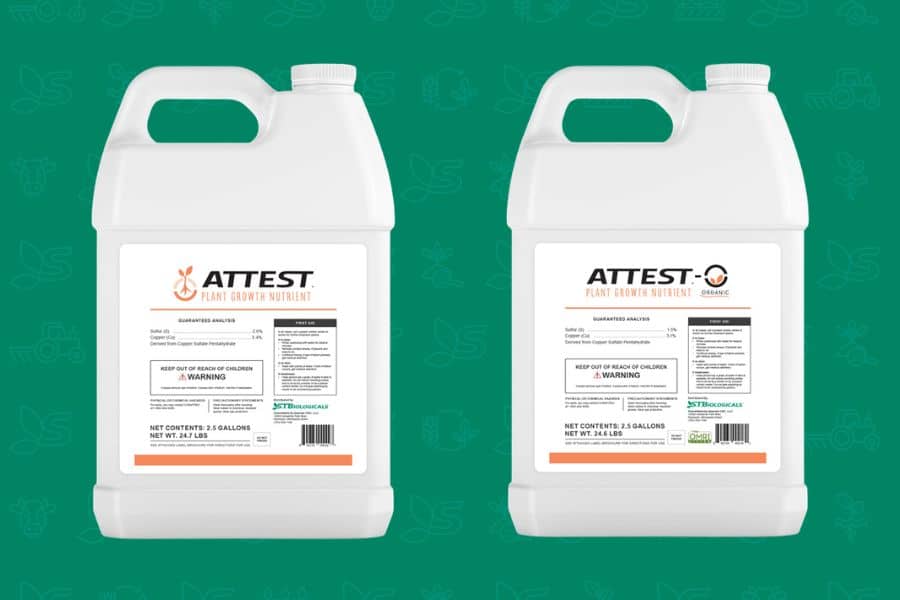
ST Biologicals’ Attest is a copper-based foliar plant growth nutrient that is formulated to maximize copper efficiency in row crops.
Here’s how it works:
- Chelated copper moves across the leaf cuticle.
- Our proprietary delivery system transports copper throughout the plant’s vascular tissue.
- Improved nutrient movement within the plant.
Rather than simply supplying another nutrient, Attest places copper where and when your plants can use it most effectively. It is available in conventional and organic formulations to meet the needs of conventional, regenerative, and organic operations.
While your crops need copper in trace amounts, don’t underestimate its importance in optimal plant health, from early growth and flowering to harvest and storage. With Attest, you can maintain optimal copper levels for your crops to maximize the return from high-quality crops on every acre.
The ST Biologicals mentors are here to help you improve copper nutrition and overall crop health on your operation. Get in touch with our mentors today. We’re here to help you succeed. When soil speaks, we listen.
Copper’s Role in Healthy Plant Development FAQs
Why is copper important for plant health?
Copper activates enzymes involved in photosynthesis, respiration, protein synthesis, and lignin production, helping plants grow stronger, healthier, and more resilient throughout the season.
How does copper improve crop flavor and quality?
Copper supports efficient carbohydrate production and movement within the plant, leading to better sugar accumulation, improved flavor, higher-quality produce, and enhanced nutritional value.
Why do crops become copper deficient even when soil contains copper?
High soil pH, high organic matter, and nutrient interactions can tie up copper in forms that plant roots cannot absorb, creating deficiencies despite adequate total soil copper levels.
How can foliar copper applications benefit crops?
Foliar applications bypass soil limitations by delivering copper directly to plant tissues during periods of high demand, supporting plant growth, crop quality, and post-harvest storage performance.