Improving copper levels on your farm requires an understanding of how copper behaves in soil and managing it through testing, targeted amendment, and ongoing monitoring. Keep plant-available copper in the optimal range for healthy, productive crops.
The hidden hunger plants have for micronutrients can cause lower yields or decreased nutrient profiles in your crops. Improving copper levels on your farm can reduce your plants’ hunger for this essential nutrient.
A deficiency of copper, as well as other micronutrients, makes your plants more susceptible to disease. It also causes them to be less resilient to environmental stresses. On the other hand, excess copper in your soil will reduce the absorption of water and other mineral elements by your crops. Again, this makes your crops less resilient. What you’re looking for is an optimal copper level, one where plant-available copper supports your plants without causing harm.
Understand How Copper Behaves in Your Soil
We’re always worrying about the leaching of nutrients from our croplands. However, that is not a worry with copper. Copper doesn’t move readily through the soil, or even a plant. Copper naturally occurs in soil as positively charged Cu2+ ions. These ions bind tightly with negatively charged organic matter and other soil minerals. In other words, copper sticks around in your soil for years.
The benefit of copper’s immobility in the soil is that if you have a copper deficiency, it can probably be fixed in one year. On the other hand, a copper excess can take several years to fix. An excess of copper not only impacts your crops but also impacts soil microbial communities and earthworms. Both allies in creating greater crop resilience.
Drilling down to the plant level, copper tends to be more abundant in the roots and base of the plant. Plants have evolved specific pathways and micronutrient ions that move copper through the plant to where it’s needed. So, if you provide optimal levels of plant-available copper in the soil, the plants can take it from there.
How to Improve Copper Levels at Your Operation
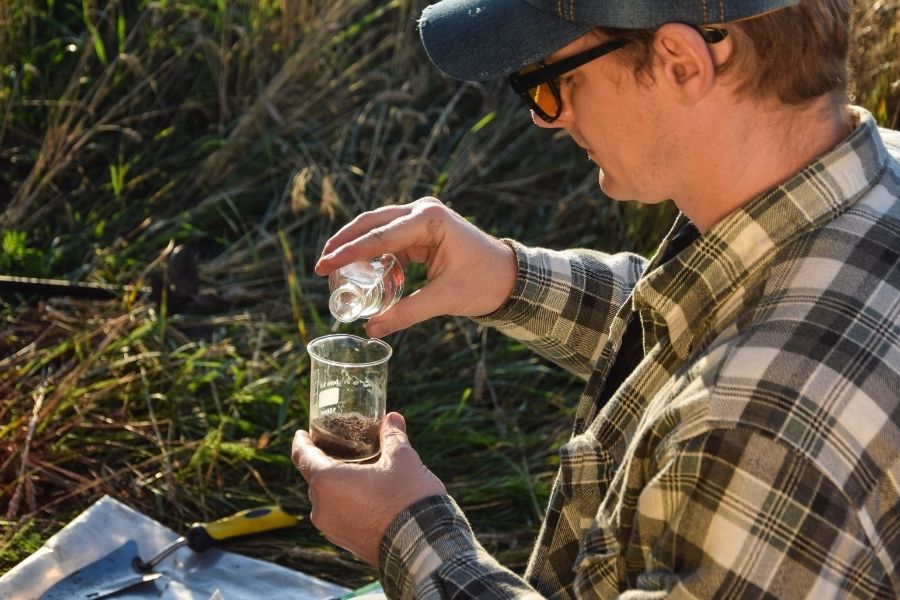
Step 1: Test Your Soil
The first step in determining copper levels in your soil is to have your soil tested. You can test soil in the middle of winter, as long as your soil is not frozen solid. Our certified crop consultants at ST Biologicals use the Haney and PFLA soil tests to measure copper levels in soil.
Step 2: Amend Your Soil
If you find your soil is deficient in copper, we recommend Attest as an effective foliar spray. Foliar application transports copper through the vascular tissue of the plant. It increases copper as a catalyst for photosynthesis and plant respiration. Attest gets copper in the right amount, at the right time, in the right place.
Step 3: Monitor Copper Levels Over Time
You should use all available tools to monitor micronutrient availability in your fields. Scouting for visible signs of plant stress, soil tests, yield maps, and just looking at weather over time are all valuable for accessing field and plant health.
Improving copper levels in your fields can reduce the hidden hunger your plants have for this and other micronutrients. Wondering where to start? Get in touch with the ST Biologicals mentors today. We’re here to help you succeed. When soil speaks, we listen.
Improving Copper in Soil FAQs
What is “hidden hunger” for copper in crops?
Hidden hunger occurs when copper levels are low enough to limit plant performance but not low enough to cause obvious visual symptoms. Crops may look acceptable yet still suffer yield loss, reduced nutrient density, and lower stress tolerance.
Why doesn’t copper leach out of soil like other nutrients?
Copper exists as positively charged Cu2+ ions that bind tightly to organic matter and soil minerals. This strong binding keeps copper in the soil for years, making deficiencies easier to correct than excesses.
How can too much copper harm crops and soil health?
Excess copper can reduce water and nutrient uptake by plants and disrupt soil microbial communities and earthworm populations. These effects reduce overall soil function and crop resilience.
What’s the best way to improve copper levels without risking toxicity?
Start with soil testing to confirm deficiency, then use targeted applications such as foliar copper to supply the nutrient efficiently and safely. Ongoing monitoring with soil tests, scouting, and yield data helps maintain copper in the optimal range over time.