Zinc is an essential micronutrient that supports photosynthesis, chlorophyll production, enzyme activity, and healthy plant development, but several soil conditions can limit its availability and contribute to crop deficiencies. Through soil testing, improved microbial activity, and targeted inputs like Bantam Zinc, growers can increase plant-available zinc, support nutrient uptake, and protect crop quality and yields.
Despite zinc’s essential role in plant growth, many crops in the United States and around the world are deficient in this important micronutrient. A zinc deficiency causes yield loss and decreased nutritional crop value, both of which result in a major hit to your profit.
Let’s take a look at zinc’s role in plant growth and how you can improve the amount of plant-available zinc in your soil.
Zinc for Plant Growth
Zinc plays a vital role in plant growth. It is crucial to a plant’s ability to photosynthesize, produce chlorophyll, and remain upright. Zinc is involved in the activities of over 300 enzymes. It is the only element found across all six enzyme classes. Without proper enzyme activity, a plant’s stems and stalks are weak, nitrogen isn’t metabolized, and stomata don’t open and close properly.
Zinc’s Role in Soil Fertility
The cause of most zinc deficiencies is the lack of plant-available zinc in the soil. A number of factors contribute to this predicament.
| Soil Temperature | Cool spring soil slows the microbial activity that breaks zinc down into ionic forms. |
| Soil Type | Zinc leaches out of sandy soil more rapidly than it does from loam or clay soils. |
| Topsoil Loss | Eroded soils have more calcium carbonate on the soil surface, which absorbs zinc and withholds it from plants. |
| Low Mycorrhizal Fungi Population | Common when crop rotations are limited to a few crops that are non-mycorrhizal, such as brassicas and betas). |
| Phosphorus Levels | Excess phosphorus reacts with soluble zinc to create insoluble zinc-phosphate complexes, making zinc unavailable to plants. |
Correcting Zinc Deficiency in Your Soil
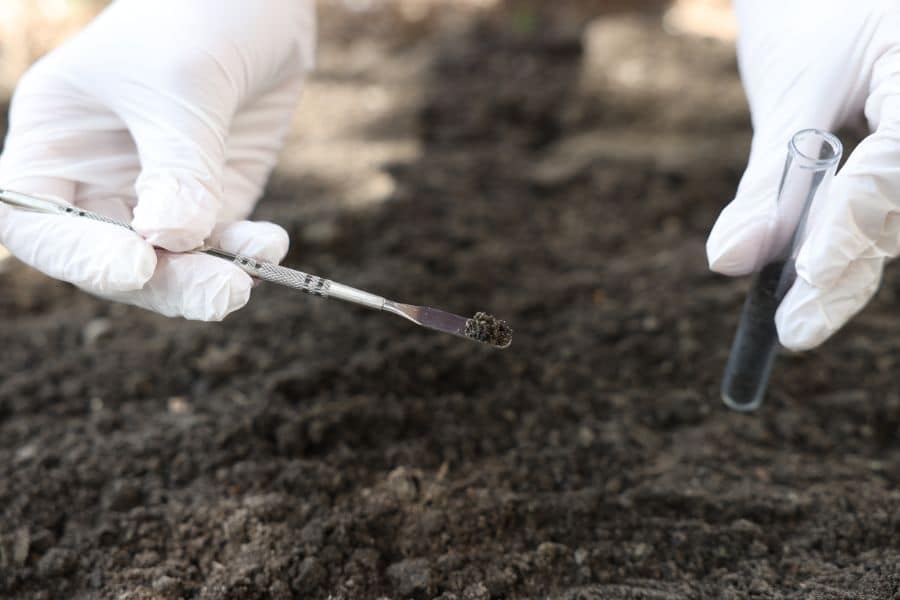
Too little zinc and your crops suffer, but it’s also possible to get too much of a good thing. Test your soil to determine if you need additional zinc in your fields or if you simply need to unlock the zinc already present in your soil so plants can use it.
Most agricultural fields have zinc, but until it’s been chelated or ionized by microbes, it’s in a form plants can’t use. Texture, pH, and the chemical structure of the soil all impact the amount of plant-available zinc in the plant root zone, or rhizosphere.
Zinc-solubilizing bacteria found in the plant root zone actively help plants uptake zinc from the soil. These bacteria chelate the soil zinc through mechanistic processes and stimulate plant growth.
If you are experiencing zinc deficiency, increasing organic matter and microbial populations are key to stabilizing plant-available zinc levels in your soil. Plants primarily absorb nutrients through their root systems, so optimizing root architecture increases all nutrient uptake, including zinc.
In fields where conventional farming practices of tillage and synthetic chemicals have been the norm for years or decades, the microbial populations are small. In that case, you may need a boost to get zinc in a plant-available form.
If a soil test reveals a zinc deficiency, the ST Biologicals team recommends treating your soil and crops with Bantam Zinc. This regenerative ag product harnesses ADS technology to deliver zinc to plants. It can be applied to the soil or as a foliar spray as part of your nutrient management plan. Since zinc does not move within the plant, the ST Biologicals mentors recommend split or frequent applications in small amounts throughout the growing season. For application rates, apply as directed on the label or work directly with an ST Biologicals mentor.
From soil and tissue testing to product recommendations and application advice, the ST Biologicals mentors are here to help you optimize plant-available zinc in your soil and improve your plant health. Get in touch with our mentors today. We’re here to help you succeed. When soil speaks, we listen.
Plant-Available Zinc FAQs
Why is zinc important for plant growth?
Zinc plays a role in more than 300 enzyme activities and is essential for photosynthesis, chlorophyll production, and healthy plant structure. It also supports nitrogen metabolism and proper stomatal function, helping plants regulate important processes involved in growth.
What causes zinc deficiency in agricultural soils?
Several factors can limit plant-available zinc, including cool soil temperatures, sandy soil, topsoil erosion, low mycorrhizal fungi populations, and excessive phosphorus levels. These conditions can reduce zinc availability even when the mineral is present in the soil.
How can growers increase plant-available zinc in soil?
Soil testing can help determine whether additional zinc is needed or whether existing zinc needs to be made more available to plants. Increasing organic matter and beneficial microbial populations, supporting healthy root development, and using zinc-solubilizing bacteria can all help improve zinc availability and uptake.
How does Bantam Zinc help correct zinc deficiency?
Bantam Zinc uses ADS technology to deliver zinc to plants and can be applied to the soil or as a foliar spray. Because zinc does not move within the plant, split or frequent applications in small amounts throughout the growing season can help maintain adequate zinc levels.