Beneficial bacteria and fungi form interconnected microbial networks in soil, exchanging nutrients through cross-feeding and signaling with plants through fungal networks. By supporting microbial diversity with broad-spectrum biological inputs like BIOACTIVE LiquiLife+ and providing the carbon sources microbes need, you can strengthen these networks, improve soil resilience, and support healthier plant growth.
Did you know there’s a superhighway right under your feet? It’s real, it’s fungal, and it connects plant roots to the vast network of microbes living in your soil. These beneficial bacteria and fungi form their own food web. When plants are in distress, they can even act as one single superorganism, moving along the superhighway to deliver nutrients to plant roots.
To make this magic happen, you need the right broad-spectrum biological input and the right carbon-based fuel to jumpstart microbial activity. As long as soil conditions are right, the microbes take care of the rest, improving plant growth and your overall yield.
Let’s take a closer look at the network of microbial relationships in your soil.
Networks of Microbial Relationships in Soil
There are many networks of microbial relationships in soil. Two that support plant and soil health best are the network created when microbes cross-feed each other and the network built by quorum sensing.
Cross Feeding: The Microbial Food Web
When microbes interact, they produce and exchange byproducts constantly. These byproducts cross-feed other beneficial microbes, strengthening the network of microbes in your soil.
Let’s imagine a carbon food source is introduced to your soil. The thousands of species in your soil ingest and digest it. The byproduct of digestion includes organic acids, enzymes, and other organic compounds. These byproducts become food for other microbes. This chain goes on and on throughout your soil.
Now, let’s consider another scenario with the same food source. But now, several species of microbes are not present in your soil. As a result, their byproducts don’t get added to the microbe food web. This causes a breakdown of the entire network and a collapse of your microbe food chain.
This is what happens when your soil’s microbial population is poor or you apply inadequate biological inputs. Only a few microbes are present in the soil, and they don’t produce the right food for other microbes to thrive.
However, if you add broad-spectrum biological inputs to your soil, you cover all your microbial bases. Products such as BIOACTIVE LiquiLife+ provide hundreds of genera of beneficial bacteria and fungi to your soil. When fed properly, these microbes create the byproducts that keep all strains of microbes happy and thriving.
Super Soil from a Super Organism
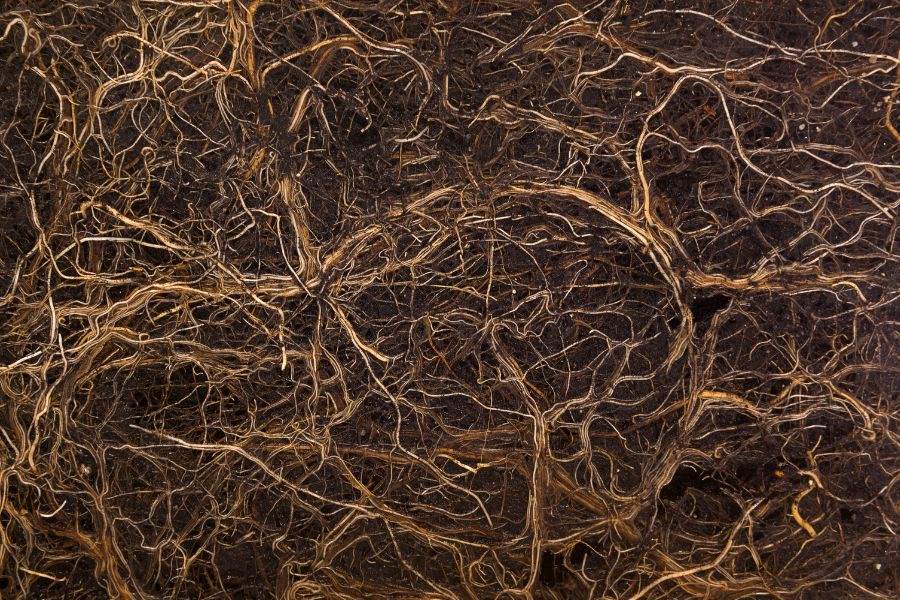
As your microbial network builds and interconnects, the bacteria and fungi in the network behave like a single superorganism. This superorganism is what interacts with plant roots. When a plant is stressed, for example, it releases signals to soil microbes through its roots that it needs help. These signals travel along a fungal network that acts as a superhighway between a plant and the microbes in the soil.
When the signal reaches microbes, the microbes excrete a chemical called an auto-inducer to beckon all of its neighboring microbes. Think of it like a dinner bell bringing your family in from their farm chores to gather around the table. In the soil, the group of microbes that answer the call is called a quorum. Working as a single superorganism, they travel along the fungal highway toward plant roots to deliver nutrients, deliver moisture, and other help to the plants.
Functional Redundancy Improves Plant Health
The microbial network in your soil is vast. It contains thousands of different species of beneficial bacteria and fungi. With a network this diverse, multiple species perform similar processes simultaneously.
This is a benefit to soil health and by extension, plant health. When a pathogen or adverse environmental condition wipes out one species of microbe, other species are ready to take its place and perform its functions in the soil. This functional redundancy is a sign of healthy soil that can help plants thrive.
The ST Biologicals mentors recommend BIOACTIVE LiquiLife+ as a broad-spectrum biological input. LiquiLife+ provides hundreds of genera of microbes to your soil that will stimulate plant growth and improve your soil. All biology in LiquiLife+ is naturally occurring with no synthetic or lab-grown additives.
Get in touch with our mentors today for advice on incorporating biologicals like BIOACTIVE LiquiLife+ into your operation. We’re here to help you succeed. When soil speaks, we listen.
Biological Products FAQs
What is the microbial food web in soil?
The microbial food web is a network of relationships in which soil microbes exchange byproducts such as organic acids, enzymes, and other organic compounds. These byproducts become food for other microbes, helping sustain a diverse and interconnected microbial community.
How does cross-feeding benefit soil health?
Cross-feeding allows different species of bacteria and fungi to support one another by consuming and exchanging microbial byproducts. This creates a continuous food web that helps maintain microbial activity and diversity throughout the soil.
What is quorum sensing in soil microbes?
Quorum sensing is a communication process in which microbes release chemical signals called auto-inducers to attract neighboring microbes. When enough microbes respond, they form a quorum and work together as a coordinated superorganism to stressed plants by delivering nutrients, moisture, and other forms of assistance.
Why is microbial diversity important for plant health?
A diverse microbial community provides functional redundancy, meaning multiple species can perform similar functions in the soil. If environmental stress or pathogens reduce one microbial population, other species can help maintain those functions and support soil and plant health. Broad-spectrum biologicals like BIOACTIVE LiquiLife+ can help introduce hundreds of genera of beneficial bacteria and fungi to the soil.