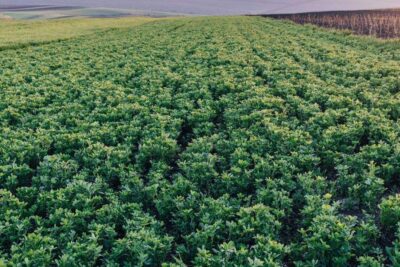
A successful alfalfa crop starts with fall field preparation, including managing crop residue, optimizing nutrient availability, evaluating weeds, and addressing soil health and pH. By selecting the right field and preparing it with the appropriate biological inputs, planting practices, and weed management strategies, growers can establish a healthy, productive alfalfa stand next season.
You recently completed the final cut of this year’s alfalfa crop. But as you know, there’s no rest for a farmer, especially during harvest. Field preparations for next year’s alfalfa crop start right now. The ST Biologicals mentors can help you read your fields, choose a spot for next year’s alfalfa stand, and develop a program to improve soil health and optimize nutritional availability.
Leave This Year’s Crop Residue for Nutritional Benefits Next Season
Your alfalfa growing strategy for next year should depend on what was in your future alfalfa field this past growing season. If you planted wheat or another small grain, leave the crop residue intact to reduce erosion and retain moisture. You can learn more about the benefits of crop residue on our blog.
If you had corn or soybeans in the field planned for alfalfa next year, you need to add another step to ensure a good stand of alfalfa. Come spring, the crop residue from corn or soybeans must be spread evenly so it doesn’t block the seed-to-soil contact of your alfalfa. Start the process in the fall by adding biostimulants or fungal inoculants to accelerate the breakdown of that crop residue over the winter.
Adding beneficial microbes to your post-harvest fields does more than break down stubble. Trichoderma or Bacillus strains not only decompose the previous crop residue, but they also add microbial diversity to your no-till fields. This improves the nutrient content of next year’s alfalfa crop. Corn and soybean residue contain nitrogen, phosphorus, and potassium benefit your alfalfa if properly managed.
Optimize Nutrient Availability
We don’t usually think of alfalfa as a heavy feeder because it’s a legume and fixes nitrogen (unlike corn with its nitrogen demands). But alfalfa does have high demands for phosphorus, potassium, sulfur, calcium, and micronutrients. After all, it is a major feedstock for animals that need a balanced diet to be productive.
It’s important to get your soil tested for those nutrients. Adding organic amendments such as manure (well-composted to kill weed seeds) can help balance nutrient availability and improve microbial activity in your soil to feed next year’s alfalfa crop all season long. Healthy soil grows healthy alfalfa. And healthy alfalfa is the best weed and pest competitor.
A note about soil pH: Alfalfa is fussy about soil pH. It likes to live in soil that’s 6.5 to 7.5. Acidic soil will ruin your crop.
Weed Control for Alfalfa Starts Now
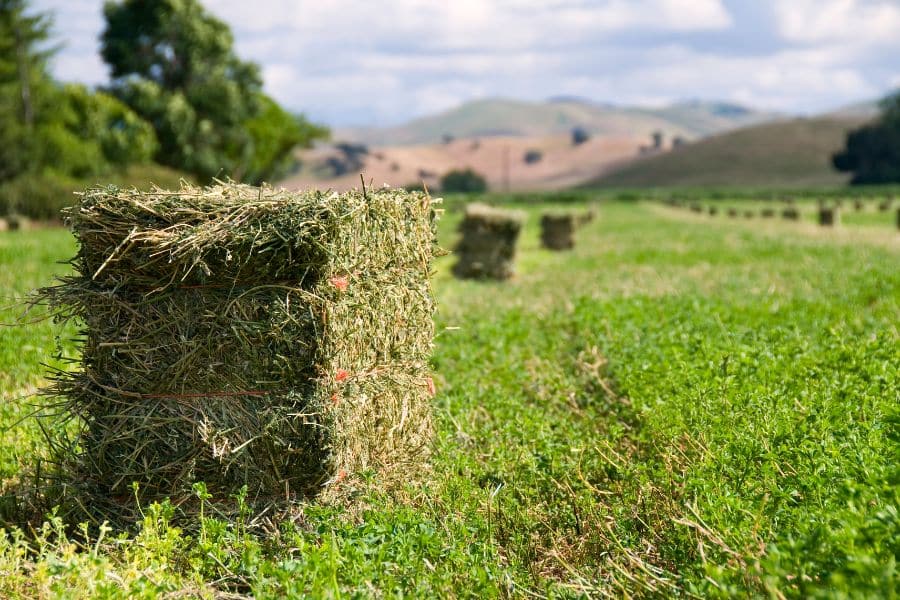
Before you do any planting, you need to know what weeds are in your future alfalfa field. Major weed competition when you’re establishing your alfalfa stand will decrease the quality and crop yield throughout the life of the stand.
Take a note of the weeds you observed this growing season. If you have a heavy infestation of perennial broadleaf weeds, you may want to reconsider where you plant next year’s alfalfa. A noxious weed infestation puts pressure on your crop yield, and it will impact your ability to sell your alfalfa as fodder if it contains poisonous weeds.
The news from weeds isn’t all bad. Weed populations tell you a great deal about the health of your soil. Certain weeds favor certain soil conditions. By reading the weeds in your field, you can learn a lot about your soil’s structure, microbial health, and nutrient availability. Use this information to inform how you prepare your fields for your alfalfa crop.
Alfalfa Planting Tips
In a no-till system, you must plant alfalfa more densely to account for any non-optimal seed-to-soil contact. Using a double-disc opener drill helps plant alfalfa into heavy residue without excessive soil disturbance. You will have to increase the seeding rate to 20 to 25 pounds per acre.
Planting a companion crop such as oats or wheat can benefit alfalfa. These crops suppress weeds and reduce competition for alfalfa seedlings. The first cutting of your alfalfa may be primarily grasses, but all subsequent cuttings will be lush alfalfa with very little weed contamination.
An early mowing at about 6 to 8 inches after emergence helps manage weeds organically. Complete the mow before the alfalfa has reached 8 inches, and any weeds or other plants competing with the alfalfa will be topped while the alfalfa continues growing strong.
A great alfalfa crop next season starts right now. Get in touch with our mentors today for individualized advice on field selection, soil prep, and choosing the right inputs for a successful crop. We’re here to help you succeed. When soil speaks, we listen.
Successful Alfalfa Crop FAQs
When should I start preparing a field for next year’s alfalfa crop?
Field preparation for next year’s alfalfa crop should begin immediately after this year’s harvest. Fall is an important time to evaluate soil health, manage crop residue, address nutrient needs, identify weeds, and choose the right field for your next alfalfa stand.
How can crop residue benefit next year’s alfalfa crop?
Crop residue can help reduce erosion and retain moisture while providing nutrients as it breaks down. Applying beneficial microbes such as Trichoderma or Bacillus strains can accelerate residue decomposition, add microbial diversity, and help make nutrients from corn and soybean residue available to next year’s alfalfa.
What soil conditions are important for growing alfalfa?
Alfalfa has high demands for phosphorus, potassium, sulfur, calcium, and micronutrients, so soil testing can help identify nutrient needs. Soil pH is also important, with alfalfa preferring soil in the 6.5 to 7.5 range.
How can I control weeds before establishing an alfalfa stand?
Start by identifying the weeds present in your field during the current growing season, particularly perennial broadleaf weeds that could compete with establishing alfalfa. Companion crops, appropriate seeding practices, and an early mowing at about 6 to 8 inches after emergence can help reduce weed competition.