Biological inputs can help improve soil health, crop performance, and return on investment when applied with the right microbial food source and according to the four Rs: Right Product, Right Time, Right Amount, and Right Placement. Field trials involving corn, soybeans, and potatoes demonstrate how incorporating broad-spectrum biologicals like BIOACTIVE LiquiLife+ into a crop fertility program can support stronger yields, improve nutrient efficiency, and potentially reduce input costs.
Hundreds of genera, thousands of species, and an entire food web and ecosystem underneath your feet. No wonder it can feel overwhelming to start implementing biological inputs at your operation. We get it, and we’re here to help.
The ST Biologicals crop advisors are experts in biologicals and other regenerative ag products. We can help you work with Mother Nature to improve your yields, maximize your return on investment on inputs, and build healthier soil for the next generation with biologicals. Let’s take a closer look at how to apply biologicals with three trials as our guide.
First Things First: Always Incorporate a Food Source
Before we dig into biologicals application and use rates, let’s put first things first: your microbes will need a food source. This could be a liquid carbon product, such as BioLife, or a specialty product such as BIOACTIVE Supercharger. The ST Biologicals mentors can help you choose the right food source for the biological products you plan to use on your fields.
Biologicals Application and Use Rates
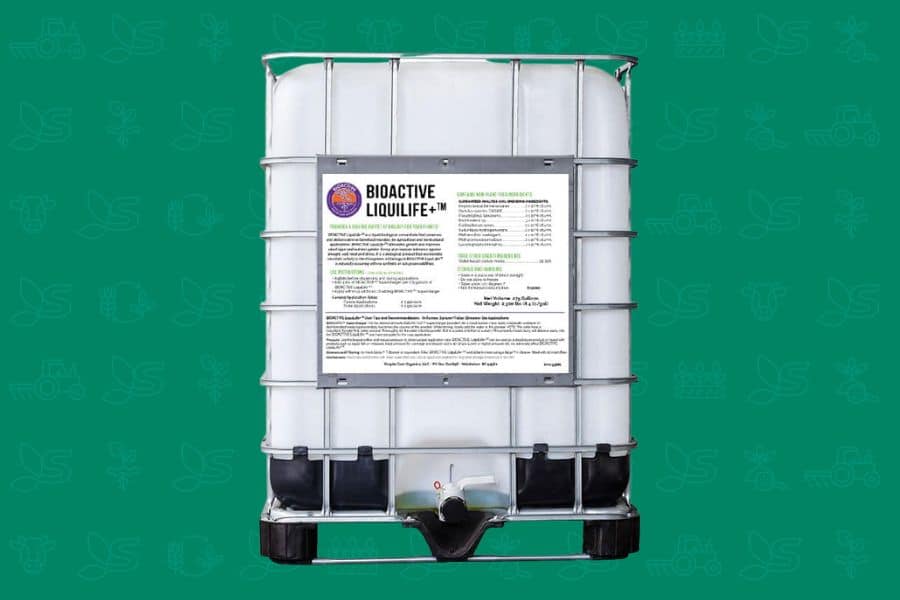
Biological products work best when you apply them with the 4Rs in mind: the Right Product, at the Right Time, in the Right Amount, at the Right Placement. At ST Biologicals, we recommend the broad-spectrum biological product BIOACTIVE LiquiLife+ for most growers. The right time, amount, and placement is determined by your fields and what you’re growing.
Generally, here’s what we recommend when applying BIOACTIVE LiquiLife+ or other broad-spectrum biological products.
| Application | Application Tips |
| Planting | Apply with or without a starter pack |
| Early Foliar | Apply via spray rig, pivot, drone, side dress, Y-drop, or other appropriate equipment. |
| Tank Partner with Insecticide or Herbicide | Do not apply with bactericide/fungicide, as you will need to reapply |
| Fertilizer Use Efficiency | Use 80% liquid nitrogen, 20% carbon source, and 10% LiquiLife+ guideline to increase nitrogen-use efficiency |
| Disease Pressure Suppression | LiquiLife+ introduces balanced biology through bio-sanitation and competitive exclusion of pathogens |
| Residue Management | Apply on fields post-harvest to jumpstart crop residue breakdown |
For BIOACTIVE LiquiLife+, you are aiming to apply 3 gallons of product per acre per season. Different microbes perform different functions in your soil at different times of the year.
The ST Biologicals mentors recommend splitting this application up throughout the growing season. For example, you could apply 1 gallon at planting, another mid-season as disease pressure suppression, and the last gallon at the end of the growing season to help break down crop residues.
Biologicals Use Case 1: Corn
Broad-spectrum biologicals give your corn crop a headstart before planting even begins. If applied at the end of the last growing season, microbes have been working all winter under the surface of your fields, turning residues into plant-available nutrients. This creates an ideal environment for corn germination and emergence.
In a trial of BIOACTIVE LiquiLife+ on corn fields, acreage treated with broad-spectrum biologicals produced corn with more successful germination, more consistent size at emergence, and more tip fill later on in the growing season. In nutrient density tests at harvest, test weight was up 3 percent, protein was up 15 percent, and methionine was up 7 percent in corn grown in fields treated with BIOACTIVE LiquiLife+.
The bottom line? A $15.30 return-on-investment per every 100 acres.
Another third-party in-furrow trial of BIOACTIVE LiquiLife+ found that making biologicals part of your comprehensive fertility plan can help you optimize your soil while applying less fertilizer. The trial compared the yield of corn fields treated with 6-24-6 at 5 gallons per acre against corn fields treated with BIOACTIVE LiquiLife+ at 2.5 gallons per acre. The LiquiLife+ treated fields produced 247.78 bushels per acre, compared to 236.24 bushels per acre the 6-24-6 achieved. That’s about a 12-bushel bump with biologicals.
The bottom line? With a healthy microbial ecosystem in your soil, planting with more N-P-K may be unnecessary or even counterproductive. Don’t waste money, time, or inputs.
Biologicals Use Case 2: Soybeans
When optimizing your soybean yield, we recommend that you start your growing season with biologicals and finish with nutrients. Applying nutrients too early in the season can make your legumes lazy growers. Once pods are set, you will face the additional hurdle of filling them.
This is where foliar applications of biologicals and nutrients can play an important role. They should be applied at four critical stages of soybean growth:
- In-furrow at the start of the growing season
- V-3/V-4
- R-1/R-3
- 7–10 days in advance of disease pressure, based on field history and crop scouting
Let’s take a look at a third-party trial of BIOACTIVE LiquiLife+ on soybeans. Before we dig into the numbers, note the trial occurred during a year with drought conditions followed by sudden hail. You may notice that baseline yields are well below what you might expect in an average year.
Nevertheless, there was improvement on the fields that received an additional application of biologicals. The trial field received an application of minerals, carbon, and biologicals via foliar application on V-4. A portion of it received an additional application at the R-2 growth stage of LiquiLife+, liquid carbon, and potassium.
The bottom line? In the field that received the second treatment, yield increased by 7.47 bushels per acre.
Biologicals Use Case 3: Potatoes
As you know, potatoes are a hungry crop that requires a lot of inputs, first at planting, then again at first hilling and once more at second hilling.
In a third-party trial of BIOACTIVE LiquiLife+ on potatoes, a grower used a standard program of nutrient inputs for their potato crop. In the first trial field, they reduced their inputs of their standard program by 10 percent and added LiquiLife+ and BIOACTIVE Supercharger as a food source to the application. In the second trial field, they applied 90 percent standard inputs, LiquiLife+, and liquid carbon. On a third field, they applied 90 percent of the standard inputs, LiquiLife+, and liquid carbon as well as potassium, phosphorus, and Calcine, a soil amendment that improves soil aggregation and compaction.
The three trial fields showed improvement in yield and return on investment of the dollars spent on inputs. The best-performing trial was the third field, where yield increased by 9,584 pounds per acre and the grower enjoyed a return on investment of $806.
The bottom line? Incorporating biologicals (and a food source for the microbes) improved potato yields, even in sandy soil that struggles to hold onto nutrients.
As you can see, broad-spectrum biologicals can improve your yields and your return on investment in inputs when applied appropriately. Always apply with a food source, such as BIOACTIVE Supercharger or liquid carbon, and consider adjusting your nutrient inputs to save on input costs and avoid diminishing returns in nutrient uptake.
Want to incorporate biologicals into your growing plan next growing season but not sure where to start? Get in touch with our mentors today for expert advice and product recommendations for your specific operation. We’re here to help you succeed. When soil speaks, we listen.
Biological Products FAQs
Why do biological inputs need a food source?
Beneficial soil microbes need a carbon-based food source to become active and perform their functions in the soil. Products such as BioLife liquid carbon or BIOACTIVE Supercharger provide microbial fuel to support biological activity and help broad-spectrum biological inputs work effectively.
How much BIOACTIVE LiquiLife+ should I apply per acre?
The general recommendation is 3 gallons of BIOACTIVE LiquiLife+ per acre per season. ST Biologicals recommends splitting the application throughout the growing season, such as applying 1 gallon at planting, 1 gallon mid-season, and 1 gallon after harvest to support disease pressure suppression and crop residue breakdown.
How can biologicals improve corn, soybean, and potato yields?
Biologicals support microbial activity, nutrient availability, and soil health, which can benefit different crops throughout the growing season. Field trials found improvements including a 12-bushel-per-acre corn yield increase, a 7.47-bushel-per-acre soybean yield increase, and a 9,584-pound-per-acre potato yield increase in specific treatment comparisons.
Can biologicals help reduce fertilizer and other input costs?
Biologicals can help improve nutrient cycling and fertilizer-use efficiency, potentially allowing growers to optimize their fertility programs. In the potato trials, adding BIOACTIVE LiquiLife+ and a microbial food source while reducing standard nutrient inputs by 10% improved yields and return on investment, with the best-performing treatment generating an $806 return on investment.