Every dairy farm is unique. Your soils, topography, and native vegetation are different from your neighbor’s. Learn the benefits of diverse pastures, select specific species for your different soil types, and understand their impact on dairy quality and quantity.
Sustainable dairy farms rely on diverse pastures to enhance soil health, increase livestock productivity, and improve overall farm resilience. A variety of plant species, including annuals, perennials, and self-seeding plants, create a dynamic and productive pasture system, especially when you employ a rotational grazing plan.
Let’s take a look at the role of diverse pastures on dairy farms and how you can create diverse forage on your operation.
Advantages of Diverse Pastures
Diverse pastures, also known as multi-species pastures or polyculture pastures, utilize a mix of grasses, legumes, and forbs instead of relying on a single type of grass. Plant diversity offers numerous benefits for soil health, livestock productivity, and overall ecosystem resilience.
- Nutrient Cycling. Different plant species have varying root depths and nutrient uptake abilities, leading to more balanced and efficient nutrient cycling in the soil. This promotes soil fertility and can reduce the need for additional fertilizers.
- Improved Forage Quality. A mix of grasses, legumes, and forbs provides a broader range of nutrients for grazing livestock. This diverse diet supports healthier animals and high-quality milk production.
- Enhanced Soil Health. Diverse root structures improve soil structure and porosity, enhancing water infiltration and retention. This helps prevent soil erosion in your pastures and promotes the growth of beneficial soil microorganisms.
- Biodiversity. Diverse pastures support a wide range of plant and animal species, creating a more resilient and balanced ecosystem. This biodiversity helps control pests and diseases naturally, reducing the need for chemical inputs.
- Extended Grazing Season. Different plant species have varying growth periods, ensuring a continuous supply of forage throughout the grazing season. This reduces the reliance on supplemental feed and helps maintain consistent livestock productivity.
Annuals, Perennials, and Self-Seeding Plants for Dairy Pastures
A mix of annuals, perennials, and self-seeding plants creates a diverse pasture that will bring the most benefit to your dairy. Each type of plant brings unique benefits to the pasture system.
Pasture Annuals
Annual plants complete their lifecycle within a single growing season. They germinate, grow, flower, set seed, and die within one year. Annuals are valuable for providing quick cover and forage, especially during periods when perennial plants are not as productive.
Examples of annuals for grazing are ryegrass and forage oats that are excellent for spring and fall grazing. Sorghum-Sudangrass and pearl millet do well during the summer heat. Annual ryegrass grows fast and outcompetes weeds making it a good option to include in grass blends.
Sudangrass is drought tolerant and has strong biomass production in the summer. However, it needs warm soil temperatures of at least 60 degrees to germinate. Graze when forage reaches a height of 18–24”, leaving a stubble height of 6–8”.
Pasture Perennials
Perennial plants live for multiple years, regrowing each season from their root systems. They form the backbone of a diverse pasture, providing consistent forage and soil stability over time.
Examples of perennials include tall fescue, meadow fescue, festulolium, orchard grass, alfalfa and some clovers. Pasture perennials provide digestible forage. They also bring nutrients up from the subsoil and decrease erosion.
Self-Seeding Pasture Plants
Self-seeding plants have the ability to drop seeds that germinate and grow in subsequent seasons, ensuring their presence in the pasture without replanting. Examples of self-seeding plants include white clover (Trifolium repens) and chicory (Cichorium intybus).
Specific Species for Your Soil Types
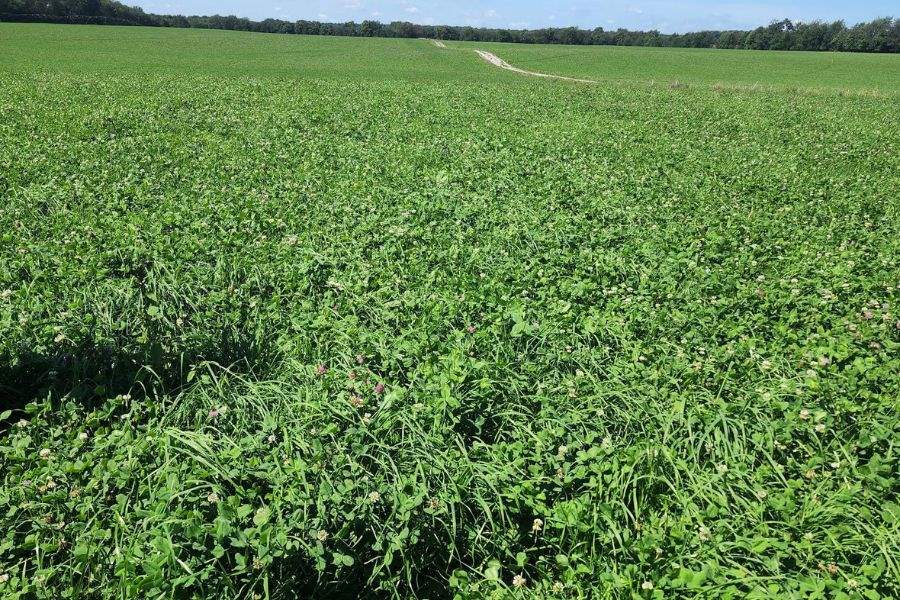
To optimize pasture productivity and soil health, find species that are well-suited to the specific soil types in your pasture. While many plants thrive in loam, some species have adapted to thrive in sandy or clay soils. Getting your mix right will improve the economics of your dairy as well as your soil structure and crop resilience.
Sandy Soils
Sandy soils need plants that can handle the quick loss of moisture after a rain. To establish an adaptive rotational plan on sandy soil, use a mix of drought-tolerant plants. Over time, you can create a sandy loam with the rotational grazing and continual roots in the ground. Change your pasture plant mix to meet the improved soil structure. For example, you may start out with sandy soil-adapted perennial ryegrass and red clover, then transition to highly digestible perennial grasses and legumes that thrive in loamy soils.
Clay Soils
Clay soils retain moisture and become compacted easily. You need plant species that will break up that compaction. Many cover crops such as daikon radish and birdsfoot trefoil are good at penetrating heavy clay soils while improving the soil porosity on the road to a clay loam. The greater the diversity of plant species, the faster beneficial microorganisms will take over and fewer disease or pest issues you’ll have. Successful regenerative farmers incorporate large numbers of plant species. Most use a combination of grass, legumes, and forbs to create a resilient and productive grazing system.
Diverse Pastures Improve Milk Quality and Quantity
Diverse pastures have a significant impact on both the quantity and quality of milk produced by dairy cows. Research has shown that milk from cows grazing on diverse pastures has higher concentrations of beneficial fatty acids and antioxidants, which are considered beneficial to human health. Additionally, diverse pastures can lead to lower methane emissions from cows, contributing to a more sustainable dairy farming system.
Increased Quantity of Milk
- Improved Forage Availability. A diverse pasture provides a consistent supply of high-quality forage throughout the grazing season. This supports higher milk yields by ensuring cows have access to nutritious forage year-round.
- Enhanced Cow Health. Healthier cows with access to a balanced diet of diverse forages are more productive. Reduced stress and better overall wellbeing contribute to increased milk output.
- Optimized Grazing Patterns. Diverse pastures encourage efficient grazing patterns, allowing cows to make the most of available forage. This efficiency translates to higher milk production.
Improved Quality of Milk
- Nutrient-Rich Milk. A varied diet of grasses, legumes, and forbs provides cows with a wider range of nutrients. This results in milk with higher levels of beneficial nutrients, such as omega-3 fatty acids, vitamins, and minerals.
- Better Flavor Profile. Milk from cows grazing on diverse pastures often has a richer and more complex flavor profile. The natural diet, free from synthetic additives and concentrates, imparts unique and desirable flavors to the milk.
- Reduced Contaminants. Diverse pastures managed with minimal chemical inputs reduce the risk of contaminants in the milk, ensuring a cleaner and safer product for consumers.
Diverse dairy pastures are a powerful strategy for enhancing soil health, livestock productivity, and overall farm sustainability. The positive effect on dairy quality and quantity is significant, with healthier cows producing more nutrient-rich milk. Diverse pastures create a multifunctional system that supports animal welfare and environmental sustainability.
Need to find out how you can incorporate these practices into your productive dairy? Contact our team at ST Biologicals to learn how your specific soils and farm practices can benefit economically from adding diversity. We’re here to help you succeed. When soil speaks and cows moo, we listen.
Diverse Pastures FAQs
What is a diverse pasture in dairy farming?
A diverse pasture includes a mix of grasses, legumes, and forbs adapted to your specific soil types to create a more productive and resilient grazing system.
How do diverse pastures improve soil health?
Different root structures and plant types improve soil structure, increase water infiltration, enhance nutrient cycling, and support a wider range of beneficial soil microorganisms.
Do diverse pastures really increase milk production?
Yes, they provide more consistent, nutrient-rich forage, which supports better cow health, improved digestion, and ultimately higher milk yield and quality.
How do I choose the right plant species for my pasture?
Select species based on your soil type and conditions to maximize pasture performance and long-term soil improvement. For example, choose drought-tolerant plants for sandy soils and deep-rooted, soil-penetrating species for clay soils.