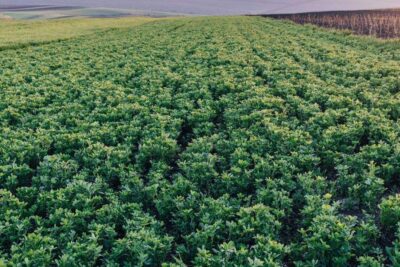
Environmental stressors such as drought, flooding, heat, and soil salinity can make forage quality unpredictable from year to year, but accurate forage testing can help growers make informed decisions for the next growing season. By using forage analysis to guide nutrient management, biological inputs, and harvest timing, growers can work toward highly digestible, nutrient-dense forage that supports animal nutrition and farm profitability.
Has your forage quality been rather fickle these last few years? Environmental stressors such as drought, flooding, heat, and soil salinity can all affect the quality of your crop year-to-year, whether you’re growing alfalfa, orchard grass, clover, or other forage.
Fortunately, it is possible to grow an optimal forage crop in the face of these environmental headwinds. How do you do it? With accurate data and the support of experienced regenerative ag mentors who can help you understand your forage sample and recommend the right inputs, in the right amounts, at the right time, in the right place.
Take Forage Samples Now for Optimal Quality Next Growing Season
A forage sample provides valuable information about the nutrients in your forage as well as its digestibility. It is best taken as close to the time of feeding or sale as possible. Let’s take a look at how to take a forage sample.
- Use a hay probe designed for baled forages rather than grabbing handfuls to get an accurate representation in your sample.
- Take the sample at the butt end of a square bale or the curved side of a round bale.
- Insert the probe 15 to 18 inches into the bale, perpendicular to the direction the stems are running.
- If you store bales outside, remove potentially soiled feed on the outside of the bales to avoid skewing your sample.
- Twenty cores per sample will provide an accurate analysis to send to the lab. Be sure to take your cores from a range of bales in your lot.
The timing of your sample is also important for accurate results. Here’s a general rule of thumb for your forage, depending on storage.
| Type of Storage | Forage Sample Timing |
| Baleage | 4 weeks post-harvest, after fermentation is complete |
| Dry Hay (Inside) | 3–4 weeks post-harvest |
| Dry Hay (Outside) | 3–4 weeks prior to feeding |
Once you’ve pulled your sample, send it to the lab for analysis. You’ll receive results between 1 and 10 business days, depending on the type of testing method used.
Wondering how to read your forage sample test? The ST Biologicals team can help with that. Read our blog for a quick guide, then get in touch with us for individualized support.
Optimize Your Forage Quality
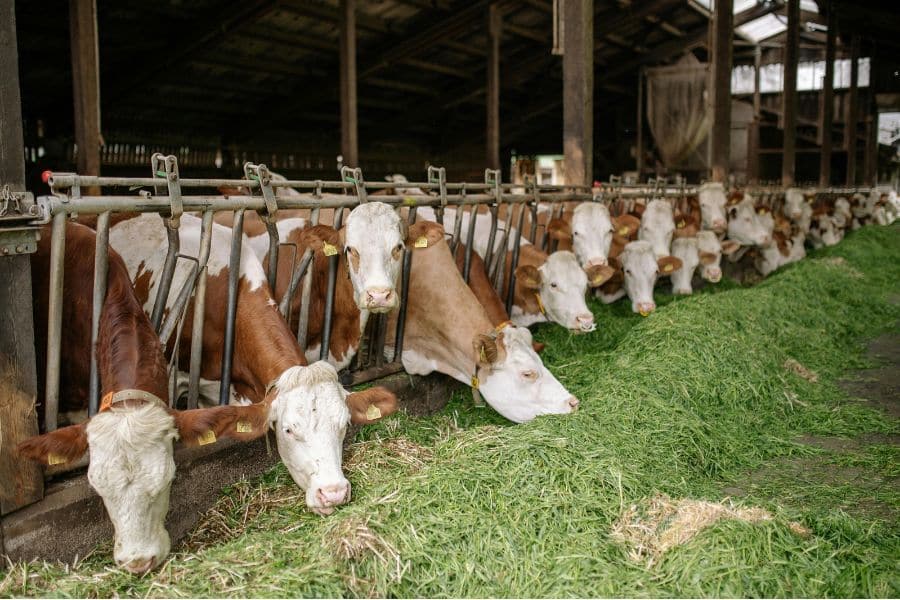
Once you understand what your forage sample is telling you, you can make adjustments to optimize your forage crop for the next growing season. Your goal is to grow highly digestible, nutrient-dense forages that are loaded with sugars, oil, highly digestible minerals, and stabilized amino acid chains.
First, focus on getting the right nutrients into your plants. Calcium, boron, sulfur, and biologicals are the key for growing high-quality forages. These nutrients and microorganisms are responsible for building strong cell walls, starch content, complete protein content, and healthy cell membranes. They also help plants tolerate environmental stress and improve nitrogen fixation in the soil. Feed the soil, feed the plants, and feed your animals.
Second, have the right harvest mindset. For dairy forage, you want to harvest for quality, not quantity (yield). Forage quality is what drives milk production. Plus, the higher your quality, the less quantity you need to feed.
When deciding when to cut next growing season, don’t use cutting intervals, as the weather is never the same. Instead, look at growing degree days. We’ve found cutting intervals cause farmers to cut later than they should for optimal nutrition. When grass is part of your forage mix, be sure to cut by its maturity and not the alfalfa’s. In this case, we have found 660 growing degree units (GDU) is ideal for first crop and then 720 from first to second. With hay crops, calculate GDU at a base of 41degrees.
With accurate forage quality data and a detailed plan, next year’s forage can provide optimal nutrition, high yields, and superior profit. Get in touch with our mentors today for help optimizing your forage crop next growing season. We’re here to help you succeed. When soil speaks, we listen.
Optimize Forage Quality FAQs
Why should I test my forage?
Forage testing provides valuable information about the nutrients and digestibility of your crop. Accurate test results can help you understand forage quality and make informed decisions about inputs and harvest management for the next growing season.
How should I take a forage sample?
Use a hay probe designed for baled forage and insert it 15 to 18 inches into the bale, perpendicular to the direction of the stems. Take about 20 cores from a range of bales in the lot, sampling the butt end of square bales or the curved side of round bales.
When should I take a forage sample?
Sampling should be timed according to how the forage is stored. Baleage should generally be sampled four weeks after harvest once fermentation is complete, dry hay stored inside should be sampled three to four weeks after harvest, and dry hay stored outside should be sampled three to four weeks before feeding.
How can I improve forage quality for next year’s crop?
Start by using forage test results to identify opportunities to improve plant nutrition and management. The blog recommends focusing on calcium, boron, sulfur, and biologicals, along with harvest timing based on growing degree days rather than fixed cutting intervals, to help produce high-quality forage.