Saline soil can disrupt your soil’s biology and threaten the productivity of your crops. Supporting salt-tolerant beneficial microorganisms can help restore soil biology, improve soil structure and nutrient cycling, and give crops a stronger foundation for managing salt stress as part of a comprehensive salinity management program.
Soil salinity is one of the most frustrating challenges you can face as a farmer. Excess salts interfere with water uptake, disrupt nutrient availability, damage plant roots, and reduce crop productivity. In the most severe cases, crops cannot establish and thrive.
Before you throw up your hands and write off acreage at your operation, let us give you a possible solution that is already hard at work under your feet. Your soil’s microbiome plays an important role in helping your crops tolerate salt stress and improve saline soils. Beneficial bacteria and fungi can help restore soil structure, encourage plant root development, and help plants cope while your soil improves.
Saline Soil: What’s Happening Under the Surface
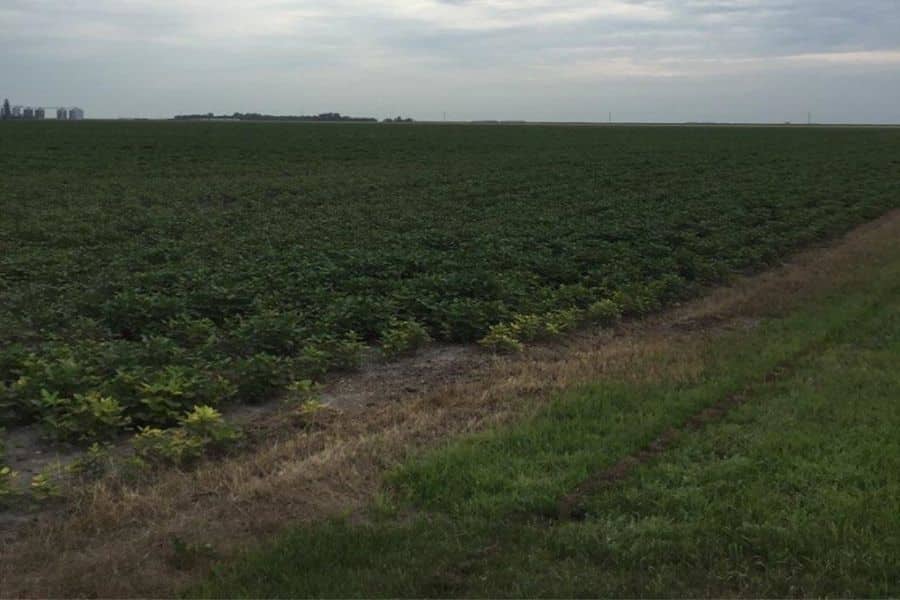
Saline soil contains excessive concentrations of soluble salts. These salts may be introduced to the soil through your irrigation water or insufficient drainage. They may also occur naturally in your soil. These salts accumulate near the soil surface or in the plant root zone.
When your soil becomes saline, you may notice the following in your crops:
- Reduced water uptake
- Stunted root growth
- Nutrient imbalances
- Leaf damage and plant stress
- Lower crop yields
- Poor seed germination
Additionally, in your soil, you may observe reduced microbial activity as well as poor soil structure.
How Saline Soil Stresses Plants
Plants growing in saline soil face several challenges. First, they have to work harder to obtain water, even when soil appears moist. Concentrations of dissolved salts in your soil make water more difficult for plant roots to absorb.
Excess salts interfere with the ability of plants to absorb the right balance of nutrients. High salinity can tie up nutrients in your soil and reduce microbial activity that would otherwise cycle nutrients to your plants.
The result? A frustrating death spiral:
- Salinity stresses plants
- Stressed plants develop weaker roots
- Weaker roots access fewer nutrients
- Fewer nutrients reduce plant growth
- Reduced plant growth creates less biological activity
- Less biological activity reduces nutrient cycling in the soil
As you can see, failing to address saline soils can quickly cause collapse in your fields. Breaking the cycle requires more than simply adding fertilizer and watering more often. Adding biologicals to saline soil helps restore the biological community that moves salts away from plant roots.
Bringing Back Soil with Biologicals
When your soil’s microbial community has been disrupted by saline soil, it’s time to support it by adding back resilient, salt-tolerant microorganisms. Let’s take a look at the four primary types.
| Microorganisms | In Saline Soil. | Soil Benefits | Plant Benefits |
| Bacillus spp. | Form resilient endospores that allow them to survive environmental stresses | Organic matter decompositionNutrient cyclingCompete with pathogens | Root-zone microbial activityPlant growth promotion |
| Pseudomonas spp. | Produce biofilms to protect microbes on plant roots | Nutrient cycling | Promote root developmentProtect microbes in plant root zone |
| Rhizobium spp. | Salt-tolerant strains fix nitrogen in saline soils | Fixing nitrogen improves nutrient availability | Symbiotic relationship with legume roots to fix atmospheric nitrogen in plant-available form |
| Fungi | Improves soil compaction and moves salt below the root zone | Improve soil aggregationBetter water infiltration and holding capacityImproved drainage and air movement | Better root penetrationMore available water |
It’s important to note that microorganisms don’t make salt disappear. Instead, their activity gives salt pathways through the soil so it cannot endanger plant growth. When coupled with appropriate drainage and irrigation, the ability of microbes to improve soil aggregation can better move water through your soil and flush soluble salts downward and away from the root zone.
In mild to moderate saline soils, adding soil biology and growing your soil’s microbial community can restore soil productivity. But for more severe salinity challenges, you may need additional strategies. The ST Biologicals mentors can recommend treatment programs to bring your saline and sodic soils back from the brink.
Healthy soil biology, especially salt-tolerant species, can keep your saline soils productive as part of a salinity management program. When soil biology is healthy, your soil has a better chance of healing itself.
At ST Biologicals, we know supporting beneficial microorganisms can help you build healthier soils, stronger roots, and crops that are better prepared to handle environmental stress, including salinity. Get in touch with us to build a salinity management program. We’re here to help you succeed. When soil speaks, we listen.
Healing Saline Soil FAQs
Can soil microbes help improve saline soil?
Yes. Beneficial, salt-tolerant microorganisms can support nutrient cycling, organic matter decomposition, root development, and soil structure, helping improve conditions in saline soils and support healthier crops.
Which microorganisms are beneficial in saline soils?
Bacillus, Pseudomonas, and Rhizobium species provide valuable benefits in saline conditions, while beneficial fungi improve soil aggregation, water infiltration, drainage, and root penetration. Different microorganisms perform different functions, so a diverse microbial community can provide multiple benefits.
Can beneficial microbes remove salt from soil?
Microorganisms do not make accumulated salt disappear. Instead, their activity can improve soil aggregation and water movement, which, when combined with appropriate irrigation and drainage, can help move soluble salts below the active root zone.
How can biologicals help crops tolerate salinity?
Biologicals can replenish beneficial microbial populations and support processes such as nutrient cycling, root development, and soil structure. A healthier soil microbiome can help crops better withstand salt stress while contributing to a broader salinity management program.